


Page 11 - Submission to the 2015-16 Federal Budget
P. 11
consumer self‐management and judicious use of medicines (see Appendix 2). A pharmacist in an AHS could deliver the same services as outlined in the General Practice proposal above.
Improving medication adherence is often complex and multi‐factorial and requires interventions at the system, provider and consumer level. Pharmacists can make
a significant contribution at each of these levels. They can empower individuals, assess consumer needs and tailor solutions, and maximise the benefits arising from the health system by promoting timely and equitable access to medicines. Pharmacists can provide QUM education for Aboriginal and Torres Strait Islander people and health professionals.85 Those pharmacists already working with Indigenous Australians assist with medication adherence through simplification of medication regimens, education for self‐management and ongoing support and monitoring.
Without improved medicine information and increased medicine adherence, it is likely that chronic disease for Aboriginal and Torres Strait Islander people will remain poorly controlled and morbidity and mortality rates will remain high.
Pharmacists, who can ensure safe and effective medicine use, increase patient medication knowledge and provide education to health service staff, are particularly needed in remote areas, where there is often a scarcity of medical practitioners and lack of continuity of health professional staff.
Current challenges
Despite the high burden of chronic disease, there has been longstanding under‐use of medicines amongst Aboriginal and Torres Strait Islander people, especially in remote areas. Barriers to accessing medicines for remote Aboriginal and Torres Strait Islander people include financial and geographic constraints, failed patient‐clinician interactions,
poor healthcare delivery systems and complex therapeutic medication regimens.86 Other barriers include poverty, racism, dispossession, lack of control, the stigma associated with a diagnosis of chronic disease, educational disadvantage, shared crowded households, increased patient mobility, and inadequate health professional support.87,88
The number of GP services per person in the lowest access rural areas is less than half that of the major cities.89 Similarly 76% of pharmacists work in urban areas. There are many rural areas with little or no pharmacy services and many of Australia’s rural hospitals operate without an onsite pharmacist due to lack of funded pharmacist positions.90
There is often much confusion around medicines and many Aboriginal and Torres Strait Islander patients
in all locations still have low levels of medicine adherence relating to lack of appropriate or tailored
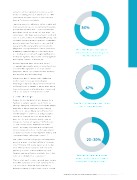
80%
More than 80 per cent of people over 65 have 3 or more long-term health conditions.8
67%
Two-thirds of Australians over 75 are on 5 or more medicines.11
20–30%
Medication-related admissions account for 20-30% of all hospital admissions for people over 65.15
Integratingpharmacistsintoprimarycareteams I©PharmaceuticalSocietyofAustraliaLtd. 11


