


Page 6 - Submission to the 2015-16 Federal Budget
P. 6
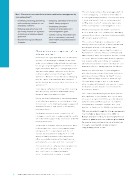
Box 1. Pharmacists can contribute to better medication management by (non-exhaustive)41:
• Identifying, resolving, preventing, and monitoring medication use and safety problems
• Reducing poly‐pharmacy and optimising medication regimens on the basis of evidence‐based guidelines
• Recommending cost‐effective therapies
• Designing tailored adherence and health literacy programs
• Developing consumer medication action plans with self‐management goals
• Communicating medication care plans to consumers, carers and other health care professionals in the team.
Pharmacists are an integral part of the
primary care team
Pharmacists are highly qualified health professionals yet their skills, knowledge and expertise are often under‐recognised and under‐utilised. Australia now has a large and growing pharmacist workforce that is highly trained and with a much younger age‐profile than most other health professions. After doctors
and nurses, pharmacists are the largest health workforce.35 Moreover, the workforce size is keeping pace with demand as compared with other health professions that are experiencing contractions in their workforces.35,36
Contemporary pharmacist training, often involving multidisciplinary teamwork, makes them ideally placed to take on collaborative roles.
During the recent debate that followed the proposal to introduce a co‐payment for general practitioner (GP) services37, some health policy experts suggested that the Government look instead to the existing health workforce.38
The Grattan Institute report on solutions for GP shortages in rural Australia underscored the need for GPs to be better supported by pharmacists and other health professionals.39
The breadth of locations in which pharmacists work, and their important contribution in each of these settings (see Box 1), is well aligned with the shift towards more collaborative and patient‐centred models of health care designed to improve the efficiency and effectiveness of the health system, particularly for consumers with chronic disease.42,43
The role for Australian pharmacists in collaborative, consumer‐centred models has thus far been described in very limited and peripheral
terms,44 in contrast to international models.45
This unfortunately leaves Australia lagging behind in terms of applying the evidence; the models in which significant benefits have been demonstrated internationally are GP‐led, but use an expanded staffing model in which nurses, pharmacists and others assume greater care management roles.46
Pharmacists are accessible health practitioners
who, by working within a collaborative framework, can assist Government to achieve fiscally sustainable, efficient and quality healthcare.
This submission highlights two key areas in which existing health resources can be better coordinated and targeted within a collaborative primary
health care model to improve health outcomes for Australians. In particular, it focuses on the safe and effective use of medicines to achieve the best possible results by: monitoring outcomes; minimising misuse, over‐use and under‐use; and improving people’s ability to solve problems related to medication, such as adverse effects or managing multiple medicines.
Pharmacist‐delivered medication management and education services are the missing link in most general practices and Aboriginal Health Services (AHSs). There are opportunities in these settings for a non‐dispensing pharmacist to work with other members of the health care team to improve medication use and reduce errors for consumers with chronic disease.
This submission acknowledges the important role and significant impact that pharmacists can have on issues relating to health literacy and medication adherence and identifies opportunities to better utilise the skills and expertise of pharmacists to address the Government’s QUM policy objectives.47
PSA recommends through the following proposals, that the Federal Government, in its 2015-16 Budget, allocates funding for practice pharmacists to work in general practices and Aboriginal Health Services to improve the quality use of medicines through a coordinated, collaborative and integrated approach to care.
6 Integratingpharmacistsintoprimarycareteams I©PharmaceuticalSocietyofAustraliaLtd.


