PSA’s Innovate RAP signals another important step in helping to achieve our vision for reconciliation, that
PSA Innovate Reconciliation Action Plan (RAP)
‘every Aboriginal and Torres Strait Islander person receives safe, quality and effective healthcare from their pharmacist that they regard as culturally safe and responsive.’

Prof. Mark Naunton
PSA National President
Message from the President
I am proud to present PSA’s Innovate Reconciliation Action Plan (RAP) 2025–2027, a continuation of our journey of reconciliation, equity, and culturally safe healthcare for all.
Our journey began with PSA’s Reflect RAP in 2021, which laid the foundations for meaningful engagement with Aboriginal and Torres Strait Islander peoples and the role that pharmacists can play in culturally safe practice. It was a time of listening, learning, and building relationships that continue to guide us today.
Since then, PSA has deliberately strengthened our efforts and impact. In 2023, we launched our Aboriginal and Torres Strait Islander People’s health care position statement, co-designed the Deadly Pharmacists Foundation Training Course with National Aboriginal Community Controlled Health Organisation (NACCHO), and developed guidelines for culturally safe medicines management. These initiatives have empowered thousands of pharmacists to begin or continue their cultural learning journey, building a more inclusive and responsive pharmacy profession.
Our Innovate RAP builds on this groundwork. It moves our commitment from abstract to action, embedding cultural safety into the education we produce, strengthening partnerships with community-controlled health organisations, and increasing Aboriginal and Torres Strait Islander workforce representation.
Most importantly, this RAP recognises reconciliation as a continuous journey.
It reflects PSA’s resolve to walk alongside Aboriginal and Torres Strait Islander peoples, guided by respect, truth-telling, and shared purpose. We will continue to advocate, educate, and lead with integrity, ensuring that every Aboriginal and Torres Strait Islander person has access to health care that is not only safe and effective, but also culturally safe and empowering.
I extend my deepest thanks to our RAP Working Group, our partners at NACCHO, and all those who have contributed to this plan. We continue to shape a future where reconciliation is lived every day, in our workplaces, our communities, and our care.

I also want to have a special acknowledgment to the RAP artist and proud Dunghutti woman, Summah Holden, who is a pharmacy student in my own community – her artwork reflects culture, Country, and her passion for culturally safe care.

Summah Holden
Pharmacy Student & Artist
About our Innovate RAP artist
Summah Holden is a proud Dunghutti woman, pharmacy student, and emerging artist. Her art reflects her culture, advocacy, and connection to Country. Through creativity, she expresses identity, tells stories, and honours her Mob. Her passion for pharmacy is rooted in making healthcare safer and more inclusive for Indigenous communities.
Summah has been actively involved in Indigenous health advocacy and culturally safe leadership through various roles and organisations. Her artwork celebrates culture, sparks conversation, and builds connection, inspired by Country and the resilience of Aboriginal and Torres Strait Islander peoples.

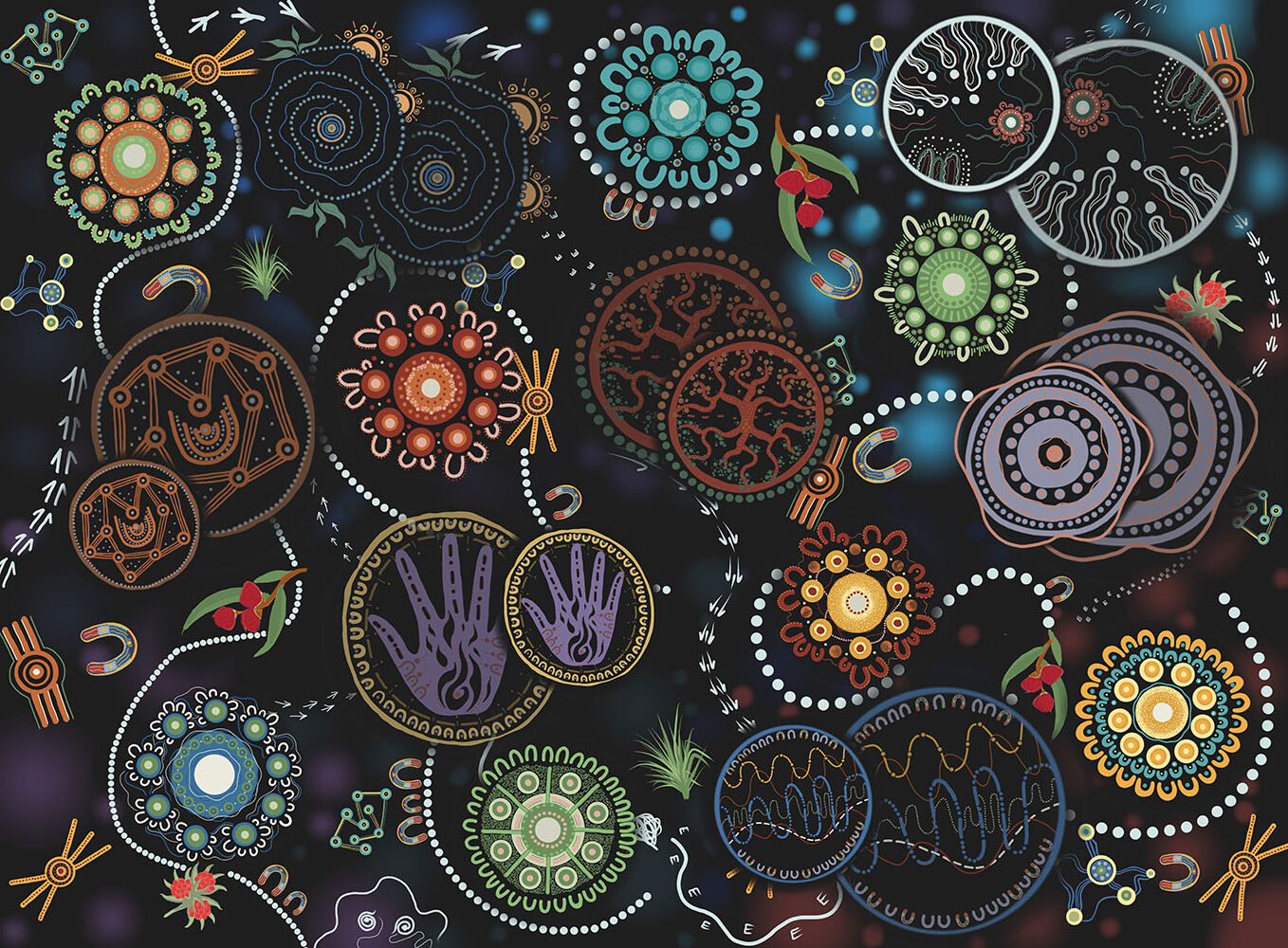
Innovate RAP artwork story
This artwork reflects the PSA’s Innovate RAP, set on a charcoal-ochre background that honours Country and First Nations knowledge. Charcoal connects all elements, symbolising PSA’s commitment to listening, learning, and embedding insights from the first RAP into practice.
Eight gathering places represent Australia’s diverse landscapes—Islands, Coastal, Plains, Mountains, Rivers, Desert, Bush, and Stone—highlighting that health needs and cultural practices are place-based.
Dotted lines show shared connections across Country, while animal tracks remind us of walking with land, spirits, and generations of knowledge. Coloured dots add depth, marking the journey from reflection to innovation.
Seven core principles—Truthtelling, Respect, Advocacy, Collaboration, Connection, Opportunity, and Healing—overlap to show the shift toward embedding culturally safe practice. Smaller symbols depict current actions: bush medicine, resting place, education framework, international collaboration, and meeting place.
Icons of lemongrass, quandong, and native raspberry honour traditional medicines integration with Western practice. Resting place for cultural protocols embedded in palliative care training. PSA members appear as U-shapes in PSA colours, positioned to show listening, learning, and applying knowledge.
 Overall, the piece traces a journey from listening to action, celebrating place-based knowledge and sustained work to improve health outcomes for Aboriginal and Torres Strait Islander peoples.
