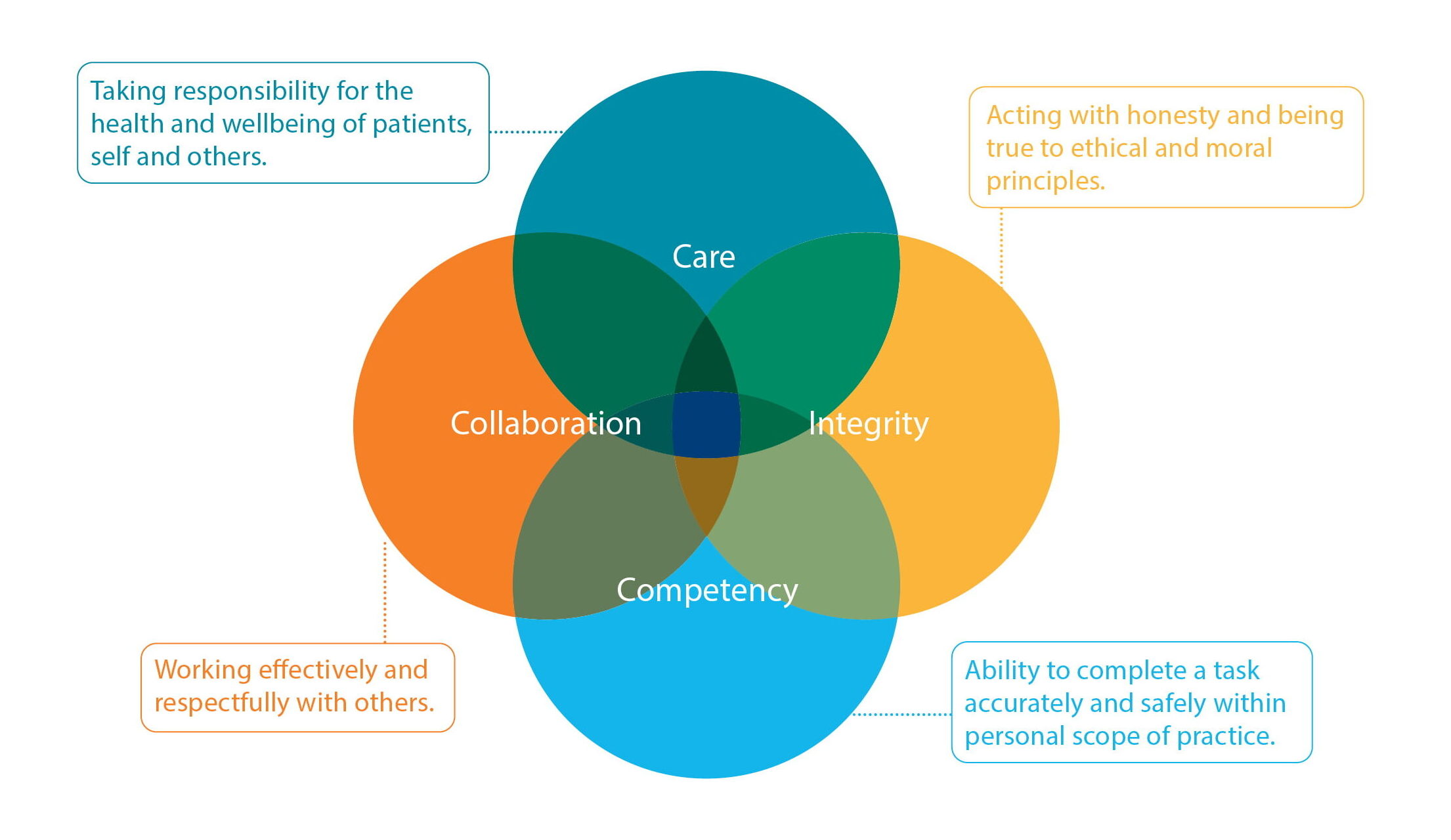
The PSA’s Code of Ethics for Pharmacists (the Code) articulates the expected standards of ethical behaviour of pharmacists towards individuals, the community and society. Principles and obligation statements of the Code of ethics are applicable to every pharmacist regardless of their practice setting, role, scope or level.
Code of Ethics


Four domains of the Code of ethics
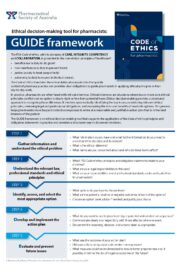
GUIDE framework
The GUIDE framework is an ethical decision-making tool that supports the application of the Code of ethics principles and obligation statements in practice and provides a structured way to document decisions. This can be downloaded or printed to support your considerations in ethical dilemmas and saved for future reference.
 Case studies
The cases below are worked examples applying the GUIDE framework. They illustrate how the revised Code of ethics should be applied to contemporary cases. Ethical decision-making relies on contextual detail. It is important to note that these cases are provided for illustrative purposes only. Information presented for each of the cases should not be taken as a comprehensive resolution of the professional issues presented, nor should these be taken as reasons for practicing in a certain way or not with regard to ethical practices.
Elena is a community pharmacist in a town with a significant First Nations population. A regular patient, Mr G, comes in with a prescription for a new blood pressure medication. During the consultation, Elena notices Mr G is hesitant and quiet. When she asks if he has any questions, he mentions that he is also visiting a traditional healer and using ‘bush medicine’ for his heart.
Step 1 – Gather information and understand the ethical problem.
-
What information do you have and what further information do you need to understand the situation and its context?
-
What is the ethical dilemma?
-
What harms are you concerned about and who do these harms affect?
This scenario involves a potential drug–drug interaction. Elena could ask Mr G about the bush medicine he is using to explore this further. However, he may not know the details or may be unable to share them if the information is culturally sensitive or sacred. Even when such information is available, there is limited published evidence on the efficacy and safety of many bush medicines, making it difficult to assess potential interactions.
The ethical dilemma arises from a tension between the pharmacist’s obligation to ensure patient safety and the need to deliver culturally safe and respectful care. Balancing clinical considerations with respect for the patient’s cultural practices is central to this situation.
The potential harms primarily affect the patient. These include physical harm resulting from the interaction, as well as the risk that the patient may disengage from the healthcare system if they feel their cultural practices are not respected. More broadly, there are implications for the profession, as failure to navigate this situation appropriately could undermine trust in pharmacists and healthcare providers.
Step 2 – Understand the relevant law, professional standards and ethical principles.
-
Which PSA Code of Ethics principles and obligation statements relate to your dilemma?
-
What are your legal responsibilities in this case?
-
What are your responsibilities under professional standards, codes and guidelines for pharmacists?
The following principles and obligation statements apply to this case:
- Care principle 1b: prioritises the health and wellbeing of the patient.
- Care principle 1f: acts to prevent harm to the patient.
- Care principle 2a: respects the dignity and autonomy of the patient.
- Care principle 2b: supports shared decision-making.
- Care principle 2e: acknowledges the right of people to use traditional or cultural medicines and helps patients feel safe and respected when they disclose or discuss their use.
- Care principle 2f: provides, or facilitates access to, information and advice in appropriate language, detail and format for the patient.
- Care principle 2i: respects the patient’s choice, including the right to refuse treatment, care or advice, or to withdraw consent at any time.
- Care principle 2l: commits to providing care that people who identify as Aboriginal and Torres Strait Islander consider to be culturally safe and responsive.
The Ahpra shared Code of Conduct emphasises that practitioners must provide care that is not only clinically appropriate but also culturally safe for Aboriginal and Torres Strait Islander peoples. This involves recognising that cultural safety is defined by patients and communities themselves and requires the health practitioner’s ongoing reflection on their own attitudes, behaviours, and the power dynamics present in healthcare interactions as well as the recognition of systemic racism.
Step 3 – Identify, assess, and select the most appropriate option.
-
What options do you have to choose from?
-
What are the potential positive or negative outcomes of each of the options?
-
Choose an option (seek advice if needed) and justify your choice.
Elena identifies the following potential responses to this situation:
a. Strongly advise Mr G to stop taking the bush medicine and instead take the antihypertensive.
Elena could strongly recommend ceasing the bush medicine in favour of the prescribed antihypertensive, based on its established safety and efficacy. While this approach prioritises evidence-based care and may reduce the risk of harm, it does not respect the principle of self-determined decision-making and may undermine the cultural significance of the bush medicine for Mr G.
b. Provide balanced information to support Mr G’s decision-making.
Elena could provide clear, balanced information about the prescribed antihypertensive and any available information about the bush medicine, including concerns about potential interactions and ways to reduce associated risks. This supports Mr G in making an informed decision about his care, while respecting his autonomy and acknowledging the cultural significance of the bush medicine alongside the safe use of medicines.
c. Do not discuss the bush medicine.
Elena could choose not to address the bush medicine on the basis that it may fall outside her scope of practice. However, this approach fails to meet her responsibility for patient health outcomes, as providing advice on complementary medicines is a core competency. Avoiding the discussion may result in missed opportunities to identify and mitigate potential risks.
Option b is justified as it balances patient safety, autonomy, and cultural respect. By providing clear, appropriate information, Elena prioritises Mr G’s health and wellbeing and works to prevent harm, while supporting safe and informed use of medicines. This approach also recognises and respects Mr G’s cultural use of traditional medicines, upholds his dignity and autonomy, and facilitates shared, informed decision-making.
This option also aligns with the Ahpra shared Code of Conduct by delivering care that is culturally safe and responsive, ensuring Mr G feels respected and supported in discussing his use of bush medicine.
Step 4 – Develop and implement the action plan
-
What do you need to put in place to mitigate potential unintended consequences?
-
Communicate clearly and respectfully with those affected where relevant.
-
Document the reasoning, decision, and actions taken as appropriate.
To mitigate potential unintended consequences, Mr G’s blood pressure and other relevant clinical parameters should be regularly monitored to assess his response to treatment and identify and manage any risks promptly.
Step 5 – Evaluate and prevent future issues.
-
What was the outcome of your action plan?
-
Did your actions bring about unintended consequences?
-
What measures could be implemented to ensure better preparedness and, if possible, minimise the risk of negative outcomes in the future?
Elena should take the opportunity to educate staff on culturally safe care and the potential for interactions between bush medicines and conventional therapies, and to promote greater awareness and confidence in managing similar situations in the future.
Larissa works in a community pharmacy. She has just received a limited supply of 10 boxes of novel GLP-1 agonist which has been unavailable for some time. The pharmacy technician dispenses the three scripts for the regular patients who were waiting on supply. Later that day, a new patient comes in with a repeat prescription for the same medicine and says her friend told her they had stock. The dispensary technician asks Larissa if she should dispense it or keep the rest of the stock aside to make sure their regular patients have a supply given the ongoing supply disruption. This prompts Larissa to consider the most appropriate way to distribute the limited supply of medicine during the shortage.
Step 1 – Gather information and understand the ethical problem.
-
What information do you have and what further information do you need to understand the situation and its context?
-
What is the ethical dilemma?
-
What harms are you concerned about and who do these harms affect?
There is a limited supply of an important medicine, creating challenges for ensuring patient access. At present, it is unclear when additional stock will become available, which adds uncertainty to decision-making and planning. The medicine may be prescribed for two different indications – diabetes and weight management. While both uses are supported by evidence, only one is approved by the TGA. Additional information that might be useful in understanding the context of this situation include the indication for which the patient is receiving the medicine and whether the patient is initiating therapy or continuing established treatment.
The ethical dilemma in this situation arises from the tension between the obligation to provide fair and equitable access to medications for all patients and the obligation to prioritise the health and wellbeing of each individual patient and to prevent harm. Prioritising one group over another may be justified in some circumstances, but it must be carefully considered to ensure fairness and transparency.
The potential harms primarily affect patients who may experience reduced or delayed access to their medicine. This could lead to adverse health outcomes if treatment is interrupted or unavailable. There are also broader implications for the profession, as inequitable or poorly managed decision-making in the context of medicine shortages may undermine public trust in pharmacists and the healthcare system.
Step 2 – Understand the relevant law, professional standards and ethical principles.
-
Which PSA Code of ethics principles and obligation statements relate to your dilemma?
-
What are your legal responsibilities in this case?
-
What are your responsibilities under professional standards, codes and guidelines for pharmacists?
The following Code of ethics principles and obligations statements apply to this case:
- Care principle 1a: fulfils their duty of care to the patient first and foremost.
- Care principle 1b: prioritises the health and wellbeing of the patient.
- Care principle 1c: supports the safe, appropriate, judicious and efficacious use of medicines.
- Care principle 1f: acts to prevent harm to the patient.
- Care principle 2a. respects the dignity and autonomy of the patient.
- Care principle 2b. supports shared decision-making.
- Care principle 2j: creates and maintains a safe, welcoming, respectful and inclusive environment for all patients.
- Care principle 3a: facilitates timely access to healthcare resources, while supporting their use in an equitable and sustainable manner.
- Competency principle 2d: recognises limitations in systems and frameworks and addresses the limitations or drives improvements to support patient care, public safety and professional accountability.
Step 3 – Identify, assess, and select the most appropriate option.
-
What options do you have to choose from?
-
What are the potential positive or negative outcomes of each of the options?
-
Choose an option (seek advice if needed) and justify your choice.
a. Dispense the medicine to the new patient on a first‑come, first‑served basis.
Larissa could decide to supply medicines purely on a first-come, first-served basis. This approach promotes fairness, respects patient autonomy, and supports equal access to medicines. However, this approach does not recognise that patients may have different levels of clinical need. Some patients may derive greater clinical benefit from the medicine or face a greater risk of harm if treatment is delayed or interrupted, while others may have suitable alternative treatment options available. As a result, this approach may conflict with the pharmacist’s obligation to prioritise individual patient wellbeing, fulfil their duty of care, and actively prevent harm.
b. Reserve stock for regular patients.
Larissa could dispense the medicine to regular patients only, regardless of whether the therapy is ongoing or commencing, or clinical need. This approach may support continuity for some but does not consistently prioritise patient wellbeing or the safe and appropriate use of medicines. This approach is largely influenced by loyalty – a human value that, while understandable, should not outweigh ethical and professional responsibilities. It restricts equitable and timely access for new patients and may result in those with greater clinical need being denied treatment. As such, it risks undermining the pharmacist’s duty of care, obligation to prevent harm, and responsibility to allocate resources in a patient-centred, and clinically appropriate manner.
c. Reserve stock for patients already established on therapy.
Larissa may prioritise continuity of care by reserving stock for patients already established on therapy. This supports the responsibility to maintain patient wellbeing, prevent harm from treatment interruption, and promote the safe and effective use of medicines, while also recognising the need to manage limited resources responsibly. However, this approach may delay treatment for new patients, potentially causing harm depending on urgency, and may be perceived as unfair, limiting equitable access to care. While it partially considers clinical need, it does not fully account for important factors, such as differences in indication, severity, or the availability of alternative treatments, creating tension between fairness and harm minimisation.
d. Prioritise based on individual clinical need and risk of harm.
Larissa could prioritise patients based on clinical need, which requires obtaining sufficient information about factors, such as indication, the patient’s broader clinical circumstances (including disease control), medical history, concurrent therapies and the availability of alternative treatment options. This approach supports the obligation to prevent harm, and ensure the safe, appropriate, and effective use of medicines through informed, evidence-based decision-making. However, some of this information may be difficult to gather. The decision may be subjective and challenging to apply consistently, raising concerns about fairness and transparency. It also places less weight on the patient’s own perspective regarding the importance of the medicine and the impact that delayed or interrupted treatment may have on their overall wellbeing. This potentially limits patient autonomy and opportunities for shared decision-making by prioritising professional assessments of clinical need over individual values and preferences.
e. Prioritise supply based on indication.
Larissa may allocate stock according to the perceived clinical need based on the indication of use. This approach seeks to prioritise patient wellbeing, prevent harm, and promote the safe and appropriate use of medicines, while managing limited resources to maximise overall benefit. However, clinical need and risk of harm do not always align with a specific indication. Patients with lower-priority or less evidence-supported indications may still face significant harm if treatment is delayed or withheld. Relying on indication alone may therefore oversimplify individual circumstances and lead to inequitable outcomes, with some patients feeling unfairly disadvantaged or stigmatised.
f. Follow advice issued by the regulatory or professional bodies.
Larissa may rely on regulatory or professional guidance to manage medicine shortages, supporting consistent and transparent decision-making and promoting the responsible, sustainable use of medicines. This approach supports the professional expectation to practice in alignment with the systems and frameworks of the pharmacy profession. However, is not inherently equitable, as it is based on population-level considerations and assumes consistent application across all cases. It reflects generalised or theoretical clinical need rather than individual patient circumstances. Applying regulatory advice without judgement risks patient harm in this scenario.
This is an ethically complex case with no single option that resolves all competing considerations. Ethical reasoning should recognise how contextual detail influences the appropriateness of each action plan.
The Code guides Larissa to apply ethical reasoning, weigh relevant risks and obligations, and rule out options that carry excessive harm or are not professionally defensible. In this case, option b would be the least defensible one as it is not grounded in ethical principles but rather human value of loyalty. Other options may also be appropriate depending on the circumstances. Overall, the Code supports Larissa in identifying the most appropriate course of action for the situation, enabling a decision that is considered, justified, and grounded in patient‑centred care.
Step 4 – Develop and implement the action plan
-
What do you need to put in place to mitigate potential unintended consequences?
-
Communicate clearly and respectfully with those affected where relevant.
-
Document the reasoning, decision, and actions taken as appropriate.
Communication with the patient should be clear, transparent, and respectful, outlining the reasons for decisions and any available options. Larissa should also document relevant clinical factors, the rationale for her decision, and any actions taken to ensure accountability and support continuity of care.
Step 5 – Evaluate and prevent future issues.
-
What was the outcome of your action plan?
-
Did your actions bring about unintended consequences?
-
What measures could be implemented to ensure better preparedness and, if possible, minimise the risk of negative outcomes in the future?
Larissa should put safeguards in place to minimise harm to all patients. This may include monitoring remaining stock closely and maintaining a list of patients awaiting supply to support fair and consistent follow‑up. She should consider alternative therapies in consultation with prescribers where suitable and ensure continuity plans are in place for patients at higher risk of harm from interruption. Clear internal processes (e.g. team briefing on allocation approach) will help ensure consistent and defensible decision‑making.
Larissa should develop a policy for managing stock shortages in the future. This policy should recognise her duty to procure enough stock to cater to the needs of her community while balancing this with her duty to ensure that other pharmacies can discharge this responsibility as well. In application of this, Larissa should refrain from ordering more stock than she needs.
A 28-year-old man presents to a pharmacy and asks whether he can ask the pharmacist, Sofia, a few questions in a private space. In the consultation room of the pharmacy, he asks Sofia whether it is safe to take MDMA in combination with sertraline.
Step 1 – Gather information and understand the ethical problem.
-
What information do you have and what further information do you need to understand the situation and its context?
-
What is the ethical dilemma?
-
What harms are you concerned about and who do these harms affect?
MDMA and SSRIs have an additive serotonergic effect, meaning that if a patient taking an SSRI uses MDMA, they are at risk of serotonin toxicity.1
The ethical dilemma centres on the tension between avoiding perceived approval of illicit drug use and ensuring patient safety regardless of the patient’s choices.
Potential harms include physical risks to the patient, particularly serotonin toxicity, as well as possible alienation from the health system if trust is compromised. Broader impacts may also affect the profession through loss of public trust and, more widely, society.
Step 2 – Understand the relevant law, professional standards and ethical principles.
-
Which PSA Code of ethics principles and obligation statements relate to your dilemma?
-
What are your legal responsibilities in this case?
-
What are your responsibilities under professional standards, codes and guidelines for pharmacists?
The following principles and obligation statements apply to this case:
- Care principle 1c: supports the safe, appropriate, judicious and efficacious use of medicines.
- Care principle 1f: acts to prevent harm to the patient.
- Care principle 2a: respects the dignity and autonomy of the patient.
- Care principle 2b: supports shared decision-making.
- Care principle 2d: recognises and respects patients’ diversity, culture, gender, beliefs, values, characteristics and lived experience.
- Care principle 2f: provides, or facilitates access to, information and advice in appropriate language, detail and format for the patient.
- Care principle 2j: creates and maintains a safe, welcoming, respectful and inclusive environment for all patients.
- Integrity principle 1c: acts in a truthful, transparent and non-misleading manner.
- Competency principle 1e: is accountable for practising safely and providing care within their own scope of practice, and for maintaining professional competence related to that scope of practice.
- Collaboration principle 1g: does not discriminate against others, including patients and staff.
- Collaboration principle 2c: recognises their limitations in their individual scope of practice and seeks guidance from, or makes timely referrals to, suitably qualified practitioners.
Step 3 – Identify, assess, and select the most appropriate option.
-
What options do you have to choose from?
-
What are the potential positive or negative outcomes of each of the options?
-
Choose an option (seek advice if needed) and justify your choice.
Sofia identifies the following potential responses to this situation.
a. Discuss the safe use of MDMA with the patient.
This is within Sofia’s scope of practice as she has the expertise and professional duty to provide evidence-based information about the drug–drug interaction and potential consequences. There is information about the risk of serotonin toxicity in commonly used clinical guidance (e.g. Australian Medicines Handbook) and pharmacists can interpret and communicate information tailored to the individual patient.
b. Refuse to discuss the safe use of MDMA with the patient.
Potential justifications for this option may include the view that it falls outside the pharmacist’s scope of practice, or concerns that providing advice on the safer use of recreational drugs could be perceived as endorsing or promoting their use potentially leading to harm.
c. Refer the patient to the police.
There is no ethical or legal justification for this.
Option a is preferred. Sofia should practise objective harm reduction. She is ethically obligated to provide clear, evidence-based and non-judgmental information outlining how combining SSRIs and MDMA causes serotonin syndrome. This enables the patient to make a safer, informed choice free from stigma and provides an opportunity to offer pathways to specialist support. Sofia should recognise that offering advice regarding the use of recreational substances like MDMA is a distinct action from encouraging the use of such substances.
Step 4 – Develop and implement the action plan
-
What do you need to put in place to mitigate potential unintended consequences?
-
Communicate clearly and respectfully with those affected where relevant.
-
Document the reasoning, decision, and actions taken as appropriate.
Sofia should ensure that the person can identify the signs and symptoms of serotonin syndrome and know when to seek medical help.
She should also refer the person to services that provide support to people who use alcohol and other drugs.
Step 5 – Evaluate and prevent future issues.
-
What was the outcome of your action plan?
-
Did your actions bring about unintended consequences?
-
What measures could be implemented to ensure better preparedness and, if possible, minimise the risk of negative outcomes in the future?
If Sofia is not already familiar with the local services that provide support for people who use alcohol and other drugs (AOD), she should take the time to identify and understand the available referral pathways and support options in her area. Developing this knowledge will enable her to provide timely information, make informed referrals, and connect individuals with services that best meet their holistic needs. Familiarity with local AOD services also supports person-centred care and helps ensure that patients receive access to appropriate support when they are ready to seek assistance.
Ref: 1. Buckley N, ed. Adverse effects of antidepressants. Australian medicines handbook; . At: Adverse effects of antidepressants – Australian Medicines Handbook
Rahul manages a community pharmacy in the city and employs three pharmacists. He has recently recruited a fourth pharmacist and is adjusting the roster. Rahul hopes that he can reduce his own working hours and make sure that at least two pharmacists are on duty each day. The new pharmacist calls Rahul before their first shift to inform him that they have a conscientious objection to the supply of the emergency contraceptive pill. They ask him how this will be managed in the pharmacy.
Step 1 – Gather information and understand the ethical problem.
-
What information do you have and what further information do you need to understand the situation and its context?
-
What is the ethical dilemma?
-
What harms are you concerned about and who do these harms affect?
The new pharmacist has stated a conscientious objection to supplying the emergency contraceptive pill (ECP). Other pharmacists within the pharmacy are available to provide this service.
In this situation, there is a potential conflict between the pharmacist’s professional obligations to support patients’ wellbeing and prevent harm, and the pharmacist’s personal autonomy to hold and act according to their beliefs. This can also be understood more broadly as a tension between the autonomy of the pharmacist and the autonomy of the patient seeking care.
There are also potential harms to consider, including moral injury for the pharmacist if they are required to act against their beliefs, as well as physical and psychological harm to the patient if access to timely care is delayed or denied.
Step 2 – Understand the relevant law, professional standards and ethical principles.
-
Which PSA Code of Ethics principles and obligation statements relate to your dilemma?
-
What are your legal responsibilities in this case?
-
What are your responsibilities under professional standards, codes and guidelines for pharmacists?
The following principles and obligation statements apply to this case:
- Care principle 1a: fulfils their duty of care to the patient first and foremost.
- Care principle 1b: prioritises the health and wellbeing of the patient.
- Care principle 1f: acts to prevent harm to the patient.
- Collaboration principle 1a: behaves with respect towards others.
- Collaboration principle 1c: engages in open and considerate communication with colleagues to resolve professional differences, while maintaining patient safety as the primary focus.
- Collaboration principle 1f: supports an environment where staff are treated with dignity, contributions are valued and colleagues feel confident to question or discuss decisions or report incidents without fear of reprisal.
- Collaboration principle 1g: does not discriminate against others, including patients and staff.
Pharmacists have specific legal responsibilities in this context. These include a legally recognised right to conscientiously object to the provision of certain services, allowing them to refrain from participation where it conflicts with their personal beliefs.
Step 3 – Identify, assess, and select the most appropriate option.
-
What options do you have to choose from?
-
What are the potential positive or negative outcomes of each of the options?
-
Choose an option (seek advice, if needed) and justify your choice.
Rahul identifies the following potential responses to this situation.
a. Refuse to hire a pharmacist who is a conscientious objector.
Refusing to hire a pharmacist who is a conscientious objector would ensure that all patients have consistent access to ECP. However, this approach is likely to constitute discriminatory hiring practices by excluding a candidate based on personal beliefs rather than professional competence.
b. Require that the pharmacist supplies ECP to all patients who request it.
Requiring the pharmacist to supply ECP in all circumstances would ensure uninterrupted patient access. However, this approach may result in moral injury by compelling the pharmacist to act against deeply held personal beliefs.
c. Allow the pharmacist to unconditionally practice conscientious objection.
Allowing unrestricted conscientious objection would fully respect the pharmacist’s right to act according to personal beliefs. However, this option risks compromising timely patient access to ECP and may result in gaps in care.
d. Allow the pharmacist to practice conscientious objection within a structured system.
Implementing a structured framework where another pharmacist (who doesn’t practice conscientious objection) is always rostered alongside the pharmacist with conscientious objection balances competing obligations.
Option d supports timely patient access while respecting the pharmacist’s right to conscientiously object, aligning with key ethical and legal obligations. It upholds the duty of care, prioritises patient wellbeing, and prevents harm, while fostering respectful communication, non-discrimination, and a supportive workplace. It also recognises the legal right to conscientious objection without compromising patient access.
Step 4 – Develop and implement the action plan
-
What do you need to put in place to mitigate potential unintended consequences?
-
Communicate clearly and respectfully with those affected where relevant.
-
Document the reasoning, decision, and actions taken as appropriate.
Rahul should roster the pharmacists so that the pharmacist who is a conscientious objector is never the sole pharmacist on duty, thereby ensuring continuity of care and timely access to ECP.
It is also important to consult with other staff to confirm that the proposed approach is acceptable and operationally feasible. Clear and respectful communication should be maintained with all affected parties, and the rationale for the decision, along with the actions taken, should be appropriately documented to support transparency and accountability.
Step 5 – Evaluate and prevent future issues
-
What was the outcome of your action plan?
-
Did your actions bring about unintended consequences?
-
What measures could be implemented to ensure better preparedness and, if possible, minimise the risk of negative outcomes in the future?
Rahul should review the outcome of the action plan to assess its effectiveness and identify any unintended consequences. This includes evaluating rostering arrangements to ensure that no staff members are disproportionately affected or burdened by the policy. He should also consider whether the approach has maintained both patient access and staff wellbeing.
To strengthen future preparedness and minimise potential negative outcomes, Rahul could develop an internal policy for recruiting new staff, where prospective employees are asked to disclose any conscientious objections to established professional norms. This would support proactive workforce planning and help ensure alignment between staff capabilities and service delivery requirements.
Omar is working as a ward pharmacist in a busy hospital. The department has recently introduced a new AI risk-prediction tool designed to improve efficiency by identifying patients at high risk of medication-related harm. Omar’s team leader has advised that the tool should be used to generate a daily list of patients requiring thorough review.
Omar has found that the tool has significantly improved his productivity. However, he has become aware of concerns raised by other hospital staff that some high-risk patients are not being identified by the system and are experiencing medication-related harm.
Step 1 – Gather information and understand the ethical problem.
-
What information do you have and what further information do you need to understand the situation and its context?
-
What is the ethical dilemma?
-
What harms are you concerned about and who do these harms affect?
Omar knows that the AI tool is being used to prioritise patient reviews and that it has improved workflow efficiency. He is also aware of reported incidents where high-risk patients were not flagged by the system.
The ethical dilemma arises from a tension between relying on an organisational system designed to improve efficiency and Omar’s professional responsibility to ensure patient safety. Omar must decide whether to rely on the AI-generated list or exercise independent clinical judgement beyond the system.
The primary harm is patient harm due to missed identification of high-risk individuals, which could result in medication-related adverse events. There is also a risk of reduced quality of care if clinicians over-rely on the AI tool (automation bias).
Additionally, there may be broader harms to the profession and healthcare system, including loss of trust if digital tools are used without appropriate oversight. Omar may also face personal and professional risk if harm occurs and it is determined that he relied solely on the tool without applying clinical judgement.
Step 2 – Understand the relevant law, professional standards and ethical principles.
-
Which PSA Code of Ethics principles and obligation statements relate to your dilemma?
-
What are your legal responsibilities in this case?
-
What are your responsibilities under professional standards, codes and guidelines for pharmacists?
The following principles and obligations apply:
- Care principle 1b: prioritises the health and wellbeing of the patient.
- Care principle 1c: supports the safe, appropriate, judicious and efficacious use of medicines.
- Care principle 1f: acts to prevent harm to the patient.
- Integrity principle 2a: exercises professional autonomy, objectivity and independence.
- Integrity principle 2b: takes accountability for their actions and professional decisions and the outcomes of their decisions in every setting, including in person, social media and digital health environments.
- Integrity principle 2e: raises concerns through appropriate channels when they observe practices, behaviours or system issues that may compromise patient safety, professional standards or quality of care.
- Competency principle 2e: acts with transparency and takes responsibility for professional actions, decisions and health outcomes when using digital tools and emerging technologies.
- Competency principle 2g: maintains up-to-date knowledge of, and actively engages with, systems, frameworks and digital technologies that guide and support their practice.
Omar has a legal duty of care to his patients, which requires him to act in a way that prevents foreseeable harm. Reliance on an AI tool does not remove this responsibility. If harm occurs due to failure to appropriately assess a patient, Omar may still be held accountable regardless of the system in place.
Professional standards require that pharmacists use clinical judgement in all decision-making and ensure that digital tools are used to support, not replace, professional practice. Omar also has an obligation to raise concerns if systems or processes could compromise patient safety.
Step 3 – Identify, assess, and select the most appropriate option.
-
What options do you have to choose from?
-
What are the potential positive or negative outcomes of each of the options?
-
Choose an option (seek advice if needed) and justify your choice.
Omar identifies the following potential responses to this situation.
a. Rely solely on the AI-generated patient list
Omar may choose to follow departmental guidance strictly and only review patients identified by the tool. While this supports efficiency and consistency, it risks missing patients who are not flagged and may lead to preventable harm. This approach also undermines professional judgement and accountability.
b. Use the AI tool, apply independent clinical judgement, and monitor and report concerns
Omar may choose to use the AI-generated list as a guide while also applying his clinical judgement to identify additional high-risk patients. At the same time, Omar can actively monitor the effectiveness of the AI tool in practice, noting any cases where high-risk patients are not identified, and raise these concerns through appropriate channels, such as incident reporting systems or management.
This approach supports patient safety by ensuring that clinical judgement is not replaced by the tool, while also contributing to ongoing quality improvement of the system. However, it may increase workload and reduce efficiency in the short term.
c. Refuse to use the AI tool
Omar may choose not to use the system due to safety concerns. While this prioritises patient safety, it may conflict with organisational policy and reduce efficiency. It may also limit the potential benefits of the technology.
Option b is the most appropriate approach. By using the AI tool as a support while continuing to apply professional judgement, Omar ensures that patient safety remains the priority and that his patients are not overlooked due to system limitations. At the same time, raising concerns through appropriate channels fulfils his responsibility to improve systems and prevent harm at a broader level. This approach balances efficiency with safety, aligns with legal and ethical obligations, and recognises that accountability cannot be delegated to technology.
Step 4 – Develop and implement the action plan
-
What do you need to put in place to mitigate potential unintended consequences?
-
Communicate clearly and respectfully with those affected where relevant.
-
Document the reasoning, decision, and actions taken as appropriate.
Omar should ensure that his workflow allows time for clinical judgement beyond the AI tool. He may also collaborate with colleagues to develop informal checks or safeguards to identify patients who may not be flagged.
Omar should raise his concerns with his team leader or through formal reporting systems in a constructive and evidence-based manner. Clear communication is important to avoid misunderstanding and to promote a culture of safety.
Omar should document any identified risks, incidents, and actions taken. If possible, he should contribute to incident reports or quality improvement initiatives related to the AI tool and hence the organisation wide clinical governance.
Step 5 – Evaluate and prevent future issues.
-
What was the outcome of your action plan?
-
Did your actions bring about unintended consequences?
-
What measures could be implemented to ensure better preparedness and, if possible, minimise the risk of negative outcomes in the future?
Future measures may include improving the AI tool, providing staff training on its limitations, and establishing protocols that reinforce the role of clinical judgement alongside digital systems.
Wei is a prescribing pharmacist in a rural town in central Queensland. Wei is the only pharmacist in the town. Wei’s wife Xiaoyu, has developed the symptoms of a urinary tract infection (UTI). It is Saturday afternoon and the nearest alternate prescriber is a 3-hour drive away and is currently closed.
Step 1 – Gather information and understand the ethical problem.
-
What information do you have and what further information do you need to understand the situation and its context?
-
What is the ethical dilemma?
-
What harms are you concerned about and who do these harms affect?
In this scenario, Xiaoyu requires an antibiotic to treat a UTI. The only feasible option for her to receive timely and effective treatment appears to be through a prescription from her husband, Wei. No further information has been identified as necessary at this stage.
The ethical dilemma arises from prescribing to a family member, where the personal relationship between Xiaoyu and Wei may compromise clinical objectivity and the quality of care provided. This situation presents a conflict between ensuring timely access to treatment and maintaining professional boundaries and standards.
The potential harms in this case have an effect on multiple levels. Xiaoyu, as the patient, may be at risk if the prescribing decision is not fully objective or evidence-based. There are also implications for the profession, as such practices may undermine public trust in healthcare providers. More broadly, there are societal concerns, particularly relating to antibiotic stewardship, as inappropriate prescribing can contribute to antimicrobial resistance and impact public health.
Step 2 – Understand the relevant law, professional standards and ethical principles.
-
Which PSA Code of Ethics principles and obligation statements relate to your dilemma?
-
What are your legal responsibilities in this case?
-
What are your responsibilities under professional standards, codes and guidelines for pharmacists?
The following principles and obligation statements apply to this case:
- Care principle 1a: fulfils their duty of care to the patient first and foremost.
- Care principle 1b: prioritises the health and wellbeing of the patient.
- Care principle 1c: supports the safe, appropriate, judicious and efficacious use of medicines.
- Care principle 1f: acts to prevent harm to the patient.
- Integrity principle 3b: does not provide care in situations where a personal relationship could undermine, or be perceived to undermine, professional objectivity.
Integrity principle 3b: does not provide care in situations where a personal relationship could undermine, or be perceived to undermine, professional objectivity.
Step 3 – Identify, assess, and select the most appropriate option.
-
What options do you have to choose from?
-
What are the potential positive or negative outcomes of each of the options?
-
Choose an option (seek advice if needed) and justify your choice.
Wei identifies the following potential responses to this situation:
a. Prescribe the antibiotic.
Wei could choose to prescribe the antibiotic for Xiaoyu to enable timely access to treatment. While this may prevent delays and support effective care, he must ensure that his personal relationship does not compromise, or appear to compromise, his professional objectivity and clinical judgement. There is a risk that the quality of care could be affected, or perceived to be affected, due to the dual relationship.
b. Refer Xiaoyu to another practitioner.
Wei could refer Xiaoyu to another practitioner, such as one in a nearby town, to maintain professional boundaries and ensure independent clinical assessment. While this approach supports objectivity and aligns with professional expectations, it may result in delays to treatment and potentially cause unnecessary harm or discomfort if Xiaoyu is unable to access timely care.
Option a is justified as it prioritises Xiaoyu’s health and timely access to care, supports appropriate and safe use of medicines, and helps prevent harm from delayed treatment. While it presents a potential conflict with Integrity principle 3b, which cautions against providing care where a personal relationship may undermine or appear to undermine professional objectivity, this can be managed by ensuring decisions remain objective, evidence-based, and appropriately documented. If Xiaoyu had timely access to another prescriber option b would be more appropriate.
Step 4 – Develop and implement the action plan
-
What do you need to put in place to mitigate potential unintended consequences?
-
Communicate clearly and respectfully with those affected where relevant.
-
Document the reasoning, decision, and actions taken as appropriate.
Documentation is essential to demonstrate that the prescribing decision was clinically appropriate, objective, and made in the patient’s best interest despite the personal relationship. It should include clinical indication, relevant assessment, rationale for treatment, consideration of alternatives, and confirmation that the decision aligns with guidelines. It should also note any steps taken to minimise actual or perceived bias, supporting transparency and professional accountability.
Step 5 – Evaluate and prevent future issues.
-
What was the outcome of your action plan?
-
Did your actions bring about unintended consequences?
-
What measures could be implemented to ensure better preparedness and, if possible, minimise the risk of negative outcomes in the future?
A patient presents to Anjali’s community pharmacy with a prescription for a cannabis product. The prescription was written by a prescriber in a different city within the same state. Upon asking, the patient tells Anjali that they had a telehealth appointment with the prescriber, and that the prescription had been posted to them. He tells Anjali that it is for their ‘mental health’ but does not provide any further details when questioned further.
Step 1 – Gather information and understand the ethical problem.
-
What information do you have and what further information do you need to understand the situation and its context?
-
What is the ethical dilemma?
-
What harms are you concerned about and who do these harms affect?
This scenario involves a prescription that is legally valid but may not be clinically appropriate. The evidence supporting the use of medicinal cannabis for depression and anxiety is lacking, and THC-containing products may be contraindicated in patients with certain mental health conditions, such as psychosis.1 Before determining whether dispensing is safe and appropriate, Anjali would need to gather additional information about the patient’s medical history, diagnosis, current symptoms, and treatment goals.
The ethical dilemma arises from a tension between acting in the patient’s best interests and avoiding harm, in the context of evidence-based practice and high-risk medicines.
The potential harms in this situation primarily affect the patient, who may be exposed to inappropriate or unsafe treatment if the medicine is not clinically justified. There are also broader implications for the profession, as failure to uphold safe and evidence-based practice may undermine public trust in pharmacists and the healthcare system.
Step 2 – Understand the relevant law, professional standards and ethical principles.
-
Which PSA Code of Ethics principles and obligation statements relate to your dilemma?
-
What are your legal responsibilities in this case?
-
What are your responsibilities under professional standards, codes and guidelines for pharmacists?
The following principles and obligation statements apply to this case:
- Care principle 1b: prioritises the health and wellbeing of the patient.
- Care principle 1c: supports the safe, appropriate, judicious and efficacious use of medicines.
- Care principle 1d: will only prescribe, recommend or supply a medicine (including complementary medicine) or healthcare product or service where there is credible evidence of efficacy and the benefit of use outweighs the risk.
- Care principle 2f: provides, or facilitates access to, information and advice in appropriate language, detail and format for the patient.
- Integrity principle 2d: takes timely and appropriate action to respectfully challenge, question, intervene or decline to facilitate care or treatment when another practitioner’s actions or decisions pose a risk of harm to the patient.
- Collaboration principle 1c: engages in open and considerate communication with colleagues to resolve professional differences, while maintaining patient safety as the primary focus.
Compliance with state-specific legislative requirements governing the dispensing of Schedule 8 medicines applies in this case.
Step 3 – Identify, assess, and select the most appropriate option.
-
What options do you have to choose from?
-
What are the potential positive or negative outcomes of each of the options?
-
Choose an option (seek advice if needed) and justify your choice.
Anjali identifies the following potential responses to this situation.
a. Dispense the prescription without further investigation.
Anjali could choose to dispense the prescription as written without seeking additional information. While this approach may ensure timely access to treatment, it carries a risk of patient harm if the prescribed medicine is not clinically appropriate. It may also have professional implications if the decision does not align with safe and evidence-based practice.
b. Investigate further to determine whether to dispense the prescription.
Anjali could seek additional information to assess the clinical appropriateness of the prescription, including contacting the prescriber to clarify the indication and intended use. This allows for a proper evaluation of risks and benefits, including consideration of potential withdrawal effects if the medicine has been used long term and she refuses to dispense it. While collaborative in approach, the final decision to dispense or not remains Anjali’s professional responsibility.
c. Do not dispense the prescription.
Anjali could decide not to dispense the prescription if she believes it is inappropriate without speaking to the prescriber. This may reduce the risk of harm from inappropriate treatment but could also result in negative consequences for the patient, particularly if therapy is interrupted. There may also be professional implications if the decision is not clearly justified and communicated.
Option b is preferred. Anjali should not dispense the medication until she has consulted with the prescriber to confirm the clinical indication, relevant patient history, and that the potential benefits outweigh the risks. As the dispensing pharmacist, she is individually accountable for the decision to supply. This approach is consistent with her ethical and professional obligations to prioritise patient wellbeing, promote the safe and quality use of medicines, and ensure that treatment decisions are supported by the best available evidence.
Anjali should provide clear patient information explaining her concerns around potential risks and communicate collaboratively with colleagues to uphold patient safety.
Legally, she must ensure the medicine is supplied appropriately and in accordance with relevant requirements.
Step 4 – Develop and implement the action plan
-
What do you need to put in place to mitigate potential unintended consequences?
-
Communicate clearly and respectfully with those affected where relevant.
-
Document the reasoning, decision, and actions taken as appropriate.
Anjali should foster open and collaborative communication with the prescriber, raising concerns respectfully and maintaining focus on achieving the best outcome for the patient.
If Anjali decides to dispense the medication, she has an ongoing professional responsibility to support its safe and effective use. This includes providing the patient with clear information about potential adverse effects, warning signs that require medical review, and circumstances in which treatment should be stopped. Anjali should also reassess the appropriateness of therapy at each subsequent dispensing, including whether the medication continues to provide meaningful clinical benefit and whether the benefits continue to outweigh any risks.
If Anjali declines to dispense the medication, she has an obligation to facilitate access to a suitable healthcare professional to discuss management options.
Step 5 – Evaluate and prevent future issues
-
What was the outcome of your action plan?
-
Did your actions bring about unintended consequences?
-
What measures could be implemented to ensure better preparedness and, if possible, minimise the risk of negative outcomes in the future?
Anjali should recognise the opportunity to foster a collaborative relationship with prescribers for mutual patients.
Ref: 1. Royal Australian and New Zealand College of Psychiatrists. Therapeutic use of medicinal cannabis products. 2024. At: www.ranzcp.org/getcontentasset/233218fd-068d-4846-875e-3bf319bb5d0a/dfc3d011-8f63-43f6-9ed8-4b444333a1d0/cm-therapeutic-use-of-medicinal-cannabis-products.pdf?language=en-AU.
Recorded Webinar
Download the recorded webinar: The new Code of Ethics – what every pharmacist needs to know.
This webinar offers practical insight into the updated Code, including key changes and a new ethical decision‑making framework. It includes real‑life case studies to help apply the Code in practice, building confidence and strengthening ethical reasoning. The session aims to support pharmacists in delivering safe, ethical, and person‑centred care across all roles
