fbpx

PSA congratulates Lia Finocchiaro and the Country Liberal Party on their election in the Northern Territory

30 August 2024

The Pharmaceutical Society of Australia (PSA) warmly congratulates Hon Lia Finocchiaro MLA and the Country Liberal Party (CLP) on being elected to government in the Northern Territory.

PSA welcomes the CLP’s plan to expand pharmacy services in the community through the Pharmacy Scope of Practice program, which will offer additional health services for up to 21 conditions.


PSA also applauds the incoming government’s commitment to implement pharmacist prescribing for uncomplicated Urinary Tract Infections (UTIs) in women, within the first 100 days of government, bringing the Northern Territory in line with other Australian jurisdictions.

​PSA Northern Territory and South Australia Vice President Colleen Niland MPS welcomed the commitment, and encouraged pharmacists to pursue the appropriate training, equipping them with everything they need to provide these services”

“Empowering pharmacists to prescribe treatment for UTIs improves access to care, improves health outcomes across the Territory, particularly for rural and regional communities where access to healthcare services can be limited,” Ms Niland said.

PSA’s online training program Managing uncomplicated cystitis (Urinary Tract Infection)is available now for pharmacists.

By expanding scope, pharmacists can support primary healthcare services through timely and convenient access with community pharmacists able to treat other conditions like impetigo (school sores), travel health, smoking cessation and more.

PSA is committed to working closely with the NT Government to ensure the program best meets the needs of Territorians and pharmacists have access to the necessary additional training.

PSA National President Associate Professor Fei Sim FPS also welcomed the announcements.

“Allowing pharmacists to practise to their full and top of scope makes efficient use of health resources, benefitting the broader health system.”

“Our health system is under pressure. The time is now to look at innovative models of care where the skillsets of all health professionals, including pharmacists, can be fully utilised to build overall health system capacity as we continue to support our population’s health.

​PSA National President, Associate Professor Fei Sim FPS is encouraging pharmacists to undertake training in anticipation of their expanding roles.

​“Throughout scope expansion across the country, whether it is assessment and prescribing for management of UTIs, oral contraception or other acute and chronic condition management programs, PSA has been supporting pharmacists along the way,” Associate Professor Sim said.

“PSA is committed to focusing on workforce preparation, including training, education, practice support and upskilling of pharmacists to undertake and deliver these services.

“PSA looks forward to working with the NT Government as part of a collaborative approach to workforce preparation.”

Pharmacists in 2030 is available to pharmacists and the public at www.psa.org.au/pharmacists_in_2030 

Pharmacists encouraged to Wear it Purple and provide safe, inclusive care

30 August 2024

The Pharmaceutical Society of Australia (PSA) is proud to support Wear It Purple Day and stand in solidarity with LGBTQIA+ youth.

Wear It Purple Day was founded in 2010 in response to LGBTQIA+ youth taking their own lives following bullying and harassment resulting from a lack of acceptance of their sexuality or gender identity. The day strives to foster supportive, safe, empowering and inclusive environments for rainbow young people.

Mental health and wellbeing outcomes of LGBTQIA+ people in Australia remain a concern with rates of diagnosed depression 6 times higher than the general population. Rates of suicide attempts are 5 times higher for LGBTQIA+ young people, while young transgender people are 15 times more likely to have a suicide attempt than the general population. These statistics bring sharply into focus the importance of providing safe and inclusive healthcare for rainbow young people.

PSA is partnering with The University of Queensland (UQ) to foster inclusive and empowered primary care workforces through the Promoting queer-inclusive professional identities for diversity in primary healthcare (PRIDE co-design) project.

As a PRIDE project partner, PSA will offer education and resources to help pharmacists improve the care they provide LGBTQIA+ patients.

PSA’s recently released vision for the profession, Pharmacists in 2030, articulates six actions to realise the vision. One key action is Equity, supporting pharmacists to meet the unique needs of vulnerable individuals and priority populations to address the disparity of health status through the provision of appropriate and responsive care.

PSA National President Associate Professor Fei Sim FPS said there is still a long way to go to addressing health inequalities for LGBTQIA+ Australians.

“Everyone has the right to safe, affirming health care,” Associate Professor Sim said.

“PSA is committed to empower all pharmacists, through education and professional development, to provide culturally appropriate care to all population groups.

“As some of the most accessible health care professionals, pharmacists have a duty of care to patients to ensure that healthcare is provided in a way that is inclusive and appropriate for all people.

“We have an enormous opportunity to improve these confronting statistics and ensure that young people feel safe and supported seeking mental and physical health support.

“PSA wants to ensure all pharmacists have the confidence and knowledge to deliver safe and equitable health care.

“I challenge pharmacists to embrace the resources and training available through the PRIDE project to ensure they deliver inclusive and affirming models of care for LGBTQIA+ people in our communities.’

PRIDE Project leader and Chief Investigator Dr Megan Ross highlighted the importance of creating a culture of safe and supportive environments for LGBTQIA+ people.

“Building the capacity of the primary health workforce to deliver safe and affirming care addresses a current gap in primary care.

“Over half of LGBTQIA+ Australians have reported discrimination due to their sexual orientation, and almost 80% of people who are trans or gender diverse have experienced discrimination due to their gender identity. Stigma and discrimination in the health care context can lead to delaying or avoiding healthcare entirely which contributes to greater health disparities experienced by LGBTQIA+ communities.

“A multi-disciplinary affirming provider network will facilitate access to continuous, trustable safe and affirming care across the primary care landscape for LGBTQIA+ consumers, and we are proud to partner with PSA on the PRIDE project initiative.”

Pharmacists in 2030 is available to pharmacists and the public at www.psa.org.au/pharmacists_in_2030

PSA Calls for the removal of vaccination red tape

20 August 2024 


The Pharmaceutical Society of Australia (PSA) is calling for the removal of vaccination red tape and for national harmonisation of pharmacist vaccination scope to ensure all Australians have equitable access to vaccination services.


The Australian Immunisation Handbook serves as the national vaccination formulary. Pharmacists, along with all Australian healthcare professionals who are immunisers, should adopt this as the national standard for defining vaccine formularies, instead of relying on complex regulatory instruments unique to each state and territory.

Regardless of location, everyone should have access to the same vaccine formulary at their community pharmacy.  Vaccines should be as accessible as possible to those who need them most, at a time and place of their choosing.

Reducing barriers to vaccination uptake should be a priority to improve equity and access to the health care system. Australians are increasingly turning to pharmacists for vaccinations. Empowering pharmacists to provide this essential service, in a consistent manner across jurisdictions, will be key to reaching the immunisation target in Australia.

The approval of a vaccine to protect Australians against the highly infectious respiratory syncytial virus (RSV) is a valuable addition to the vaccines available in community pharmacies. Residents of South Australia, Western Australia, and the Northern Territory would welcome the availability of the RSV vaccine at their local pharmacies, as is the case in other all jurisdictions across the country.

Pharmacists in 2030 is the PSA’s vision for the future of the pharmacy profession and outlines a road map demonstrating how pharmacists can reach their full potential over the next 6 years, ultimately improving quality use of medicines and medicines stewardship and Australians’ access to care in an equitable, consistent and sustainable manner.  Removing regulations that prevent pharmacists from administering all vaccines to all at risk Australians would be a crucial first step towards realising this vision.


Quotes attributed to PSA National President, Associate Professor Fei Sim 

“Pharmacists are underutilised in many states and territories, with regulatory barriers preventing them from practising to their full potential when providing vaccination services.”

“Pharmacists have demonstrated competency in delivering vaccines safely and effectively. Leveraging the accessibility of pharmacists to administer a greater range of vaccines would significantly improve uptake and reduce hospitalisations from vaccine preventable diseases.”

“Allowing pharmacists to deliver childhood vaccinations, including influenza vaccines, provides Australians with greater choice and equitable access to vaccines.”

“Allowing pharmacists to practise to the top of their scope makes efficient use of health resources, benefitting the broader health system.”

“With the Continuing Professional Development cycle for pharmacists ending on 30 September, I encourage all pharmacist immunisers to visit PSA Vaccination Education Hub to help you meet your professional requirements and maintain competence in vaccination services.”

“PSA offers a variety of immunisation educational resources for pharmacists, including the Respiratory syncytial virus (RSV) module and the Vaccination Webinar Series.  The next webinar in this series focuses on promoting pharmacy vaccination services, particularly for adolescents who missed HPV (Human Papillomavirus) vaccination due to COVID lockdowns.”


Pharmacists in 2030 is available to pharmacists and the public at www.psa.org.au/pharmacists_in_2030

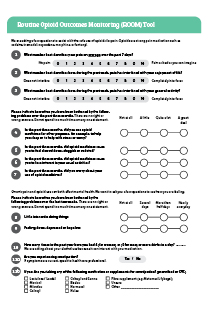
Routine Opioid Outcome Monitoring (ROOM) Tool

The Opioid Safety Toolkit also includes the Routine Opioid Outcome Monitoring (ROOM) Tool, a patient-reported outcomes measure designed to help patients and healthcare providers monitor clinical outcomes and identify risk factors associated with opioid use.


The ROOM Tool measures six key areas:  Analgesia (pain relief), Activity (functioning), Adverse effects, Addiction-related (or aberrant) behaviours, Affect (mood), and Alcohol (toxicity risk).


The ROOM Tool can be completed on paper or online, with a patient version and healthcare provider version available for download below. ROOM can be self-completed independently by the patient or with their pharmacist or prescriber. It takes less than five minutes to complete online (see button below) within the Toolkit, with online completion providing personalised information about outcomes, including identifying unmanaged pain, risks or adverse effects.  Pharmacists can utilise this tool to facilitate patient-centred discussions.

Image of ROOM Tool

Help your patients create an opioid safety plan

Using this online interactive resource, patients can create a personalised opioid safety plan (see button below) which can be shared with family members, carers or household members.  This plan helps patients identify opioid-related risks specific to their circumstances and provides guidance on recognising symptoms and treating opioid toxicity or overdose, including administering naloxone.


Naloxone has been shown to reduce opioid-related harms and is recommended for anyone on long-term prescription opioids to have in the home (referred to as ‘take-home naloxone’ – see button below).   Take-home naloxone is available as a nasal spray or intramuscular injection at no charge from many community pharmacies in Australia.  Any pharmacy can stock take-home naloxone, and any pharmacist can supply it without a prescription. You can claim reimbursement for naloxone you supply at https://www.ppaonline.com.au/

Mechanisms facilitating timely access to anticipatory medicines for community palliative patients (palliPHARM).

Palliative Care image - reassuring hands
What did we do?

PSA developed mechanisms that facilitate community patients (in private homes residential aged care facilities) to have timely access to symptom control medicines. 


Why did we do it?

To support pharmacists in avoiding unnecessary suffering of patients and unwanted transfers to acute care facilities. 


Value to PSA members

The palliPHARM interventions have raised awareness of palliative care needs amongst the pharmacy sector, improving outcomes for community-based palliative patients.


Project impact

Coming soon.

Activating pharmacists to reduce medication related problems​ (ACTMed – MRFF)

image of lots of different pills
What did we do?

PSA collaborated with partner organisations to co-design ACTMed (Actionable medication safety dashboard) which incorporates innovative IT solutions and an actionable dashboard to identify serious MRPs.


Why did we do it?

The trial sought to develop and implement innovative technology to support pharmacists in their professional practice.  


Value to PSA members

The successful development and implementation of this tool and the associated positive health outcomes provide strong evidence for the future investment in digital tools to support pharmacy practice. ​


Project impact

Coming soon.

Integrating non-dispensing Pharmacists in General Practice (Pharmacists in General Practice)

Image of GP Pharmacist talking to Dr and Nurse
What are we doing?

PSA is integrating non-dispensing pharmacists (NDPs) into general practice clinics across Australia.


Why are we doing it?

These projects demonstrate the benefit that pharmacists can play when integrated into general practice settings.  


Value to PSA members

These models demonstrate a strong business case for integrating pharmacists into general practice.


When integrated into primary practice, NDPs provide a range of clinical services within a team-based model of care that can improve patient outcomes and quality use of medications.1


As of 1 July 2024, 30 general practices across Western Australia have integrated non-dispensing pharmacists into their teams through this project, supporting improved patient outcomes.


Project impact

Quarter 1 and 2, 2024 – Non-dispensing pharmacists (NDPs) into general practice, older adults program.

3,584

patient
consultations


3,005

medication management reviews

595

transitional

care activities


15,201

total number of activities under taken by NDPs in Q1 & Q2 period

Collaboration with:

WAPHA logo

For more information about this project, please contact Bronwyn Walker

1. Shaw C, Couzos S. Integration of non-dispensing pharmacists into primary healthcare services: An umbrella review and narrative synthesis of the effect on patient outcomes. Australian Journal for General Practitioners. Available at https://www1.racgp.org.au/ajgp/2021/june/integration-of-non-dispensing-pharmacists-into-pri .

Mental Health First Aid Training – South Australia (MHFA)

Image of sad to happy blocks
What are we doing?

PSA will deliver mental health first aid training to community pharmacists and pharmacy staff working in South Australia.


Why are we doing it?
To improve early identification of mental health issues and appropriate initial support to people experiencing mental ill-health, the South Australian Government (SA Government) through the Office of the Chief Pharmacist is funding MHFA training to upskill community pharmacists and pharmacy staff working in South Australia to improve early identification of mental ill-health and increase mental health support for the community. The Pharmaceutical Society of Australia (PSA) has been commissioned by the South Australian Government to deliver MHFA training to at least 1000 community pharmacists and pharmacy staff working across metropolitan and regional South Australia over the next three years.


Value to PSA members
Pharmacists are the most accessible health professionals. Community pharmacy is often the first access point to health care for consumers. By upskilling pharmacists and pharmacy staff to identify early warning signs of mental ill health, they will be able to provide support and referrals to mental health services where necessary,  providing an additional layer of support for patients in need.


Project impact

Coming soon.


Positive feedback received from participants

“I have found that doing the Mental Health First Aid training has made me more confident to ask patients about acute mental health symptoms, including asking for the first time “Have you had thoughts about hurting yourself?”  

 It has also made me a more compassionate boss and given me scope as a leader to allow staff to take a “sick day” for the sake of mental health, resulting in overall improvements in staff satisfaction and atmosphere in the pharmacy.”  

 “This training allowed me to have a better appreciation and understanding of the situation and create a safe space for the patient to discuss about their distress and being able to appropriately refer them to community mental health resources that are available.” 

I loved the whole course, I felt engaged and learnt so much. I said to my boss, I usually feel tired at these trainings and not this one, was great!”  

It was excellent to have a pharmacist running the training as it made the information very relevant.”  

How can I sign up to undertake training?

Both digital and face-to-face training sessions are being scheduled. To enrol for a training session, please click below.

To register your interest or to join a waitlist with your preferred date, please email events@psa.org.au


How can I find out more about the program?

For more information about the program, or for questions relating to the program activities, please email SAbranch@psa.org.au


For more information about this project, please contact Adeline Tan

Guidelines for Pharmacists in Nicotine Cessation

Image of a cigarette being broken in half
Including clinical guidance and recommended dosage regimes for nicotine-containing pulmonary delivery products for smoking cessation.


What did we do?

PSA is part of a consortium of peak bodies who will inform and support the design, development and delivery of evidence-based content, interventions and for this comprehensive educational program.


Why did we do it?

PSA is best placed to support the aims and objectives of the QUDTP grant activities, through strong membership engagement that provides high-quality health care and are the custodians for safe and effective medicine use for the Australian community.


Value to PSA members

This project will deliver free, patient centred education for the profession


These guidelines are applicable to all practice settings in which pharmacists provide smoking cessation support, including non-prescription medicines.


New guidelines coming 1 October 2024.


Project impact:

Coming soon.


The development of the Guidelines for pharmacists providing smoking cessation support has been funded by the Australian Government Department of Health and Aged Care

For more information about this project, please contact Nena Nikolic and Jarrod McMaugh