Thank you for completing the PSA Member Survey

Thank you for taking the time to complete the PSA Member Survey. Your feedback will help ensure we work hard on what matters most to you.


PSA is committed to create opportunities for pharmacists to practice to their full scope, and to increase remuneration and recognition of pharmacists as medicine experts.


To find out more about how we are working to improve opportunities for all pharmacists, please visit our Advocacy webpage.


Kind regards,
PSA Member Services

Writing for Australian Pharmacist

Expression of interest for writing Australian Pharmacist articles

Submissions are encouraged by the Pharmaceutical Society of Australia (PSA) from suitable, qualified pharmacists and/or subject matter experts.

Publication is not guaranteed and is at the sole discretion of PSA. Potential authors are encouraged to contact Australian Pharmacist prior to beginning an article, so the proposal can be scoped prior to the article development and an author brief can be drawn up.


Criteria for article submissions:


  • The content must be evidence-based and referenced.
  • Clinical information/material should be consistent with current guidelines and recommendations wherever possible. For example: RACGP Therapeutic guidelines, eTG complete.
  • The author/content developer must be a subject matter expert with relevant credentials.
  • The article should be targeted to all pharmacists working in all diverse practice settings, but remain relevant to all other health professionals wherever possible.
  • The content must not contain any personal opinions or biases. Personal opinions relating to clinical matters are only acceptable, with a caveat, when it is within the purview of the subject matter expert.
  • The written content will be peer reviewed. The author may be requested to revise their contribution based on the reviewer’s comments, or provide valid reasons as to why the comments should not be considered.
  • Referencing must conform to PSA’s in-house writing style, Vancouver style.
  • PSA retains Editorial Rights, altering content as deemed necessary.
  • PSA retains the Copyright/Intellectual Property Rights upon the article’s inception.
  • Any source of financial or other support, or professional positions and relationships which may cause a conflict, must be declared.

Interested in contributing content for Australian Pharmacist?

Dispensing Practice Guidelines Review

The Pharmaceutical Society of Australia (PSA) is undertaking a review of the Dispensing Practice Guidelines.


PSA gratefully acknowledges the Australian Government for providing funding for this work.


During the public consultation period on the revised Dispensing Guidelines, PSA welcomes comments from interested individuals and organisations, including members of the pharmacy profession as well as consumers, other health professional groups and practitioners, educators, researchers and government bodies. A survey has been created to assist with feedback and commentary. Feedback can also be provided via the phone or email.


Please note: The revised Guidelines will undergo professional copy-editing and production processes following this consultation. PSA requests feedback focus on the content of the revised Guidelines, unless otherwise specified in the question. The revised guidelines are still in consultation and as such have not been endorsed.


NSW/ACT ATU20 Program and Speakers

Friday 6 March

Dr Claire O’Reilly

9:30am – 11:00am and 2:00pm – 3:30pm (repeat)


Synopsis


Dr Claire O’Reilly

11:30am – 1:00pm and 4:00pm – 5:30pm (repeat)


The session will discuss evidence-based strategies to influence patient health behaviours and referral pathways in the context of depression and mental health more broadly. Additionally, you will be guided on how to use a depression screening tool in the primary care setting.

Prof Glen Maberly

9:30am – 11:00am and 2:00pm – 3:30pm (repeat)


Synopsis


Prof Glen Maberly

11:30am – 1:00pm and 4:00pm – 5:30pm (repeat)


Diabesity describes the link between diabetes and obesity, and is an emerging epidemic in Australia. This session will outline existing and future therapeutic treatments that have the potential to treat this patient group. The importance of early detection and the role of the pharmacist in maximising treatment outcomes will also be outlined. This session will also provide information on the NSW Health Get Healthy Coaching Service.


Saturday 7 March

Natalie Raffoul

11:45pm – 12:30pm


It’s no secret that heart failure patients have a high rate of re-hospitalisation in the first two weeks post-discharge. Follow heart failure patients through the transition of care journey. Underpinned by Action Item number 5; Improve pharmacist stewardship of medication management to improve outcomes at transitions of care in Pharmacists in 2023, this practical session will look at treatments, management options and integrated care models that maximise patient outcomes.


Associate Professor Renee Bittoun

1:30pm – 2:15pm


Synopsis


Professor Lisa Nissen

2:15pm – 3:30pm


This session will feature an original ‘Prophetical’ – a dynamic and entertaining technique for engaging participants deeply. The Prophetical harnesses the power of story to connect, to intrigue, to reveal and to inspire, tapping into the intrinsic problem-solving capacity of the group as a whole. An experience not to be missed!


Sunday 8 March

Professor Jennifer Martin

9:00am – 8:45am


Join Professor Martin who will outline the pharmacokinetics of Phytocannabinoids and the interaction with the human endocannabinoid system. Professor Martin will discuss evidence-based indications and contra-indications as well as regulatory requirements of pharmaceutically formulated cannabinoid therapy in Australia.


Professor Peter Carroll

9:45am – 10:30am


Are you a pharmacist vaccinator? Want to know more on the impact of pharmacistled vaccinations? Professor Peter Carroll will provide an update on flu vaccination and outline the enablers for pharmacists as well as opportunities in the future.


Professor Lisa Nissen

11:45am – 12:30pm


Migraines, are more than just a pain in the head. With the rise of monoclonal antibodies, we have seen the therapeutic application of these agents encompass a number of indications. Professor Nissen will outline how these agents are also progressing the treatment of migraines with CGRP receptor antagonists.


Associate Professor David Newby

12:30pm – 1:15pm


Synopsis


NSW/ACT ATU – Crowne Plaza Terrigal Accommodation

Crowne Plaza Terrigal Pacific welcomes you to enjoy the region’s pristine beaches, scenic attractions and relaxed cosmopolitan lifestyle in comfort and style.


Enjoy the grandeur of the beautifully restored grand staircase as you enter the hotel, drop your bags and take in the ocean view, take a stroll along the white sands of the pine tree lined beach, then relax with a cocktail in the Lord Ashley Lounge. Crowne Plaza Terrigal is equipped with a complimentary kids club, outdoor pool and fitness centre. You can also book an indulgent beauty treatment at Endota Spa or browse the fashions and antiques in the boutiques.


The PSA has reserved a number of rooms for conference delegates at the Crowne Plaza Terrigal, at special conference rates ($229 room only for Friday 6 March and $299 room only for Saturday 7 March) to access these rates follow click here.


If you have further queries, special requests or want to extend your stay beyond the dates available please contact Crowne Plaza Terrigal In-house Reservations Team direct on 02 4384 9114, they are available 9am-5pm Monday through Friday.


Getting here

By car: The Crowne Plaza Terrigal is located 90 minutes’ drive north of Sydney and 90 minutes south from Newcastle. From Sydney take the Gosford/Woy Woy/Terrigal (Central Coast Hwy) from the M1 Freeway (Route 1). If travelling from Newcastle along the M1 Freeway take the Wyong/The Entrance/Yarramalong (Wyong Rd).


By train: Transport NSW runs regular rail services to the Central Coast departing approximately every half hour from Sydney and every hour from Newcastle, with travel time approximately 1 hour and 30 minutes from each destination. Call the Transport NSW Infoline on 131 500, or visit www.transportnsw.info for more information.

Don’t miss your chance to expand your knowledge in key therapeutic areas, network with colleagues, build relationshops with allied health professionals and take advantage of exhibitor information

NSW/ACT ATU Pre-Conference Courses

Immunistation Training & Refresher

From 1 January 2019, pharmacists in NSW are able to provide private MMR and dTpa immunisations to people aged 16 years and over (in addition to influenza). A dedicated immunisation course and refresher training course will be run as a preconference workshop at ATU on Thursday 5 March at Crowne Plaza Terrigal. This is a great opportunity for pharmacists to become accredited immunisers, and for trained pharmacist immunisers to refresh their knowledge on injection technique, particularly subcutaneous administration.

Prescription Medicine Safety

Managing risk, driving and constructive conversations

This interactive program developed in conjunction with NSW Health focuses on prescription medicines, driving and constructive conversations with patients and prescribers. Pharmacists will become confident in identifying and raising safety issues, like fitness to drive, when prescription medicines, particularly where S8 and S4D medications are being used.

Completion of the online pre-work module prior to attendance is recommended.

Immunisation Training
 

9am to 5pm, Thursday 5 March

Members: $550

Non-Members: $640

Accreditation Code: CRTO1909NAK

Immunisation Refresher
 

1:30pm to 5pm, Thursday 5 March

Members: $200

Non-Members: $320

Accreditation Code: TBC

Prescription Medicine Safety Workshop

10am to 4pm, Thursday 5 March

Members: $30

Non-Members: $30

Accreditation Code: CN19899G

Don’t miss your chance to particpate in the pre-conference workshops, spaces are strictly limited.

Implementation Tools funded by the Pharmacy Board of Australia

The tools on this page were developed with funding from the Pharmacy Board of Australia to assist pharmacists in meeting the requirements as outlined in the Board’s registration standard and guidelines on continuing professional development. The generic tools consist of written instruction guides, editable template documents, case examples of completed self-assessment and learning plan tools, and guidance presented in video format.

Guides and tools

Summary Guide

Provides an overview of how to use the competency standards framework to meet your registration requirements.

Implementation Guide

Presented as slides to step you through your professional obligations to practise safely and effectively, and to support you in using the competency standards framework and meeting registration requirements.

Self-assessment tool

An editable template document that can be used to identify the competency standards relevant to your scope of practice (and the extent to which you meet them) as well as any proposed or planned changes to your practice, and to identify your professional development needs.

Learning plan tool

An editable template document that can be used to help identify activities relevant for reaching your professional development goals, and to reflect on progress towards those goals and the impact on your practice.

Presentation modules

Video presentation introducing how the competency standards framework and the tools can be used in meeting the Pharmacy Board’s CPD registration standard.

Step-by-step guide on how to use the self-assessment tool.

Step-by-step guide on how to use the learning plan tool.

Case Studies

The case examples show how different pharmacists have used the tools to meet the CPD registration standard

Example 1 – Mary

Mary is currently employed in a community pharmacy with roles including dispensing and providing professional services. The pharmacy plans to introduce a vaccination service and Mary will be expected to take some leadership with the implementation of the service.

Example 2 – Aron

Aron works in a large tertiary hospital primarily in the cardiology ward. His roles include dispensing, monitoring prescribing patterns, developing guidelines and coordinating clinical trials. He also lectures at the university. He will soon be rostered to deal with more complex cardiac cases.

Example 3 – Sierra

Sierra works as a locum pharmacist in regional and rural areas. Her work in community pharmacies include delivery of services such as MedsCheck and opioid replacement therapy. She also provides pharmacy services support to Aboriginal Medical Services and undertakes HMRs and RMMRs.

Example 4 – Lee

Lee has a proprietary interest in a pharmacy which delivers 6CPA medication adherence programs and is involved in the Pharmacy Diabetes Screening Trial. He will cease being the Pharmacist in Charge soon, after which he will not be dispensing but will retain his ownership and management roles.

Australian Pharmacist CPD

Australian Pharmacist logo

September 2018

The below online CPD modules from the September edition of Australian Pharmacist are available free for PSA members.


Deprescribing in the elderly

Describes polypharmacy and its associated risks and identify deprescribing tools and considerations; discussing strategies to cease inappropriate medicines.

Wound management and dressings

Identifes wounds commonly encountered in the pharmacy and the principles of wound management and discusses the rationale for selecting appropriate dressings for different types of wounds.

Nitrofurantoin suspension

Recognises precautions that need to be taken by the pharmacist and considerations to take into account when preparing nitrofurantoin suspension and counsels patients/carers on it’s appropriate use.

Skin cancer

Describes different types of skin cancer and discusses the potential role and evidence for nicotinamide for non-melanoma skin cancer and its place in therapy.

Past journals

PSA members can view articles and submit answers to assessment questions from Australian Pharmacist CPD from the previous 24 months by clicking the links below.

2018

2017

2016

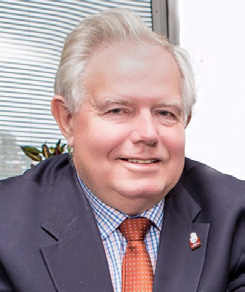
Michael Gray MPS

Director, Advantage Pharmacy Group

“Early career pharmacists need to embrace and lead practice change. I would like to be a positive voice amongst the negative out there to inspire our next generation of health care professionals.”


Michael Gray believes his education, business and legal experience can help young pharmacists looking for career advice. “I can offer mentoring support on study programs that are best suited, as well as advice on avoiding pitfalls to those who want to buy their first pharmacy” he says.


“Despite the doom and gloom that many talk about in the profession, I see great opportunities in pharmacy and it’s our younger pharmacists who will ultimately drive this. A career in pharmacy can open many doors, not just community pharmacy”. Michael added that out of all the health professions, pharmacy is the one with the most opportunities. “Don’t be put off by negative talk. Go after what you want.”

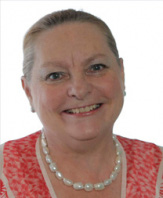
Elise Apolloni MPS

Owner, Capital Chemist Wanniassa

“We need to build a community of early career pharmacists that are inspired, resilient and ready to take on whatever challenges and opportunities are ahead of us!”


Elise Apolloni said she was lucky enough to have a number of inspiring mentors in her early days as a pharmacy student and pharmacist. “It would be a privilege and honour to be able to offer that same opportunity I had to early career pharmacists, so they too can benefit from the experience I did”. Elise says she can help by providing ideas, inspiration, guidance and a listening ear to early career pharmacists. “I am interested in making sure early career pharmacists are supported and well-advised during this very important time in their professional life”.


For Elise the “sky is the limit” in the pharmacy profession. “I think our profession is evolving to incorporate more skills and services than we can imagine, and the possibilities are endless. When you love what you do, and you can see the difference you are making to the health of your community, it is a very rewarding feeling, which is why I love being a pharmacist!”