Providing support to a patient with nicotine dependence can vary based on the service delivery model of the pharmacy or health service and the education and training of the pharmacy or health service staff. Regardless of the service delivery model of the pharmacy or health service, pharmacists should offer brief advice to all people who smoke or vape.
When providing nicotine dependence support consultations, pharmacists should establish the patient’s needs and work with the patient to consider all options to develop the most appropriate management plan. Management plans should be tailored to the patient and their individual needs.
First-line pharmacotherapy options for smoking cessation include nicotine replacement therapy (NRT), bupropion and varenicline.3 Pharmacotherapy for smoking cessation can also be considered to manage nicotine dependence from vaping.5 Therapeutic vaping goods are not first-line pharmacotherapy for smoking or vaping cessation.3
Storing, prescribing, dispensing and compounding unapproved therapeutic vaping goods involves additional considerations relating to compliance with applicable legislation and access to therapeutic vaping substances and vaping devices.
References to legislation included in this document are current at the time of publishing.
Purpose
These guidelines describe the professional obligations of pharmacists when providing nicotine dependence support. This guidance includes (where relevant):
- appropriate and effective processes
- desired behaviour or minimum expectations of good practice
- how duties and responsibilities may best be fulfilled.
These guidelines are not definitive statements of correct procedure. They are intended to provide advice and guidance to assist pharmacists to:
- meet their professional responsibilities
- exercise professional judgement in individual circumstances
- manage risks associated with providing nicotine dependence support.
Clinical guidance specific to providing nicotine dependence support is covered in Appendix 1 Treatment guidelines for pharmacists: nicotine dependence.
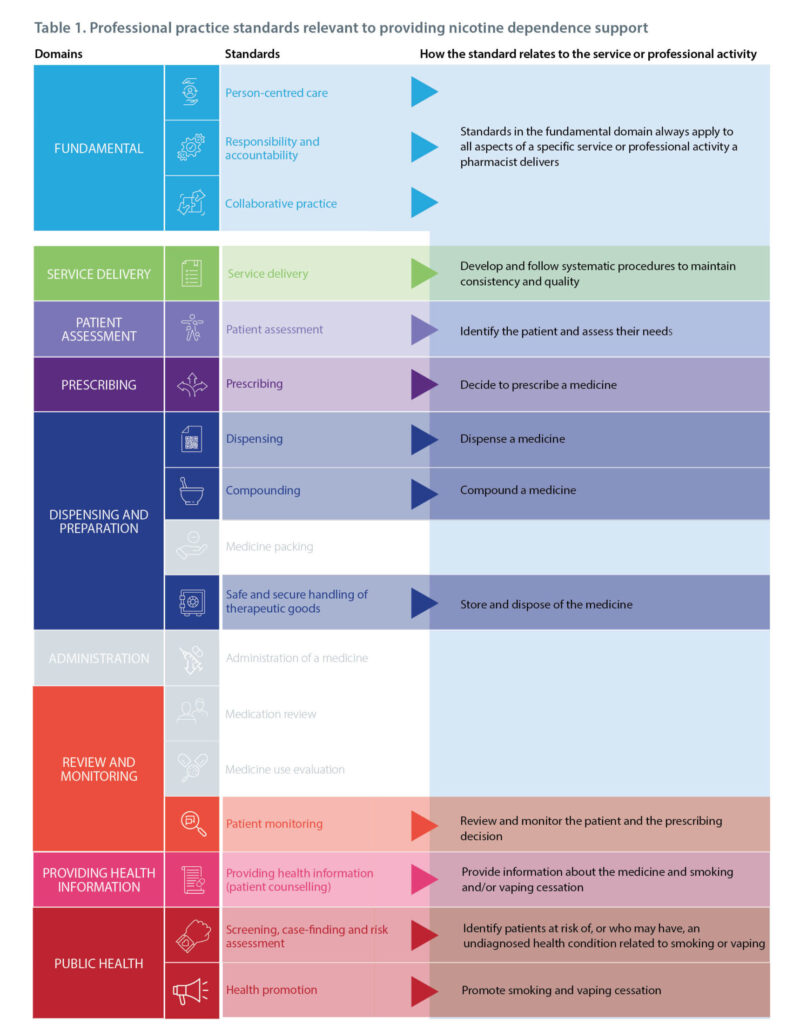
It is important that pharmacists read these guidelines in conjunction with relevant professional practice standards6, particularly those mentioned in Table 1.